Got some questions?
Frequently asked questions
Before you go
Papers, vehicle, packing, season
Do I need a visa for Namibia?
Since 1 April 2025, yes. Namibia charges German, Austrian and Swiss passport holders a visa on arrival of 1,600 NAD, roughly 82 euro, and it is available at the two international airports and at ten border posts. You can also apply for an e-visa in advance, which saves you the queue. Rules like this change, so check with the embassy before you book anything — I will point it out again when we go through your route.
What documents do I need for a self-drive safari?
A valid driver's licence, passport, vehicle registration documents, and depending on the country an International Driving Permit. Some parks also require advance booking confirmations and park permits. If you cross borders, you need the appropriate visas and a temporary vehicle import permit, you usually get that from the rental company, but ask for it well in advance.
What kind of vehicle do I need?
Usually a 4×4 with high ground clearance. A Toyota Land Cruiser, a Hilux or a Land Rover Defender are ideal: good air conditioning, reliable spare tyres, room for your gear. Small cars struggle on rough terrain, and you sit lower, which costs you sightings. The one exception is Kruger National Park, you can explore that perfectly well in an ordinary car.
What do I have to pack?
Enough water, at least three litres per person for every day you will not pass a supermarket, better five. A first-aid kit, basic tools for vehicle repairs, spare fuel cans, a GPS device or paper maps, a torch. If you travel far from the next village in rarely used areas, add emergency food and a satellite phone or another way to call for help. Reputable rental companies (Avis Safari Rental or Bushlore, for example) offer some of this as add-on equipment, for a fee, and it has to be requested in advance. And do not forget binoculars, camera and identification books.
When is the best time to go?
The dry season, roughly June to October, is best for watching wildlife: animals gather at the water sources and the vegetation is thinner. The green season brings fewer people, lower prices and a landscape that looks completely different, but also muddy roads and fewer sightings.
What is easy to forget when packing?
Four things come up again and again: the vaccination certificate, both driving licences (national and international), the printed booking confirmations, and cash. Beyond that: binoculars, mosquito protection, sunscreen, a power adapter and spare camera batteries. There is a full packing list in the free travel plan.
Do I need travel insurance?
I recommend comprehensive cover that also pays for an emergency evacuation, and that recommendation is in his own travel plan. He does not sell insurance and does not advise on which policy to take, so the choice and the extent of cover are yours. The same goes for your health: a self-drive safari asks something of you physically, and whether you are fit for it, and which vaccinations you need, is a question for your doctor.
Do I need a map, or is my phone enough?
Take both. The travel plan points to two things in particular: the printed Tracks4Africa map of Kruger, and the park maps published by krugerpark.co.za. Mobile coverage in the parks is patchy, and a route you can see whole on paper is worth more on a morning drive than one you scroll through on a screen.
Out in the park
Distances, light, animals, gates
What do I do if an animal is standing on the road?
Stay calm and stay in the vehicle — that is the rule everywhere except in the marked areas. Windows and doors closed, nothing sticking out of them, and keep your distance rather than closing it. Turn so the animal is on your side of the car, and leave the others a view too; nobody has come to look at your bumper. No horn, no shouting, no whistling, no feeding, and never off the road. If it is an elephant, keep well back and reverse if the animal seems agitated.
How far can I actually get in a day?
Less than the map suggests. The speed limit is 50 km/h on tar and 40 on gravel, but if you want to watch animals and take photographs, reckon with twenty to thirty kilometres in an hour. A route that looks like two hours on paper is half a day in practice, and that is the single most common planning mistake.
What do I do when elephants block the road?
Wait, with the engine running and the lights off, and leave yourself a way back. Elephants see poorly and an unfamiliar light can provoke them; the engine stays on so you can move at once if you have to. Never take away their line of retreat, and keep your own. Be most careful with cows and calves, and with a lone bull in musth — heavy secretion at the temples, wet inside the hind legs, and behaviour that pushes rather than avoids. Read the body language: ears spread, head shaking, trumpeting means back off slowly. In Kruger this mostly happens in the evening, when the herds move down to the Sabie and cross the H1-2 and H4-1, and a herd can hold a road for thirty to sixty minutes. Plan the extra time rather than trying to squeeze past.
Do I have to stay in the car the whole time?
Yes, except in the areas marked for it. Windows and doors stay closed, nothing may stick out of a window or sunroof, and driving off-road is not allowed. The rest camps are fenced, so inside them you can move freely. These are park rules, not suggestions, and there are fines attached to some of them.
What happens if I reach the gate too late?
You have to be in camp or out of the park before the gate closes, and arriving late can cost you a fine. Gate times are the reason the last leg of a day should always have air in it, they are not the sort of rule anyone waves through.
When is the best time of day to be out?
Early, ideally at the moment the gates open, and again in the last hours before they close. Through the hot middle of the day the animals stand at water or in the shade, which is a good time for a hide, a picnic spot or a break at camp rather than for covering distance.
Can I go out after dark?
Not on your own — but you can book a guided night drive at reception when you check in. It is the only way to see the nocturnal animals, and it is worth planning the evening around: the camp restaurant is usually closed by the time you get back, so buy something to eat beforehand.
Working with me
What I do — and what I do not
Do you book the trip for me?
No, and that is a deliberate line rather than a gap. I advise and I plan, you book yourself, directly with the parks, camps and rental companies. No money for your trip passes through me and I take no commission, which is also why I can say plainly when something is not worth it.
Can I buy one of the photographs on this site?
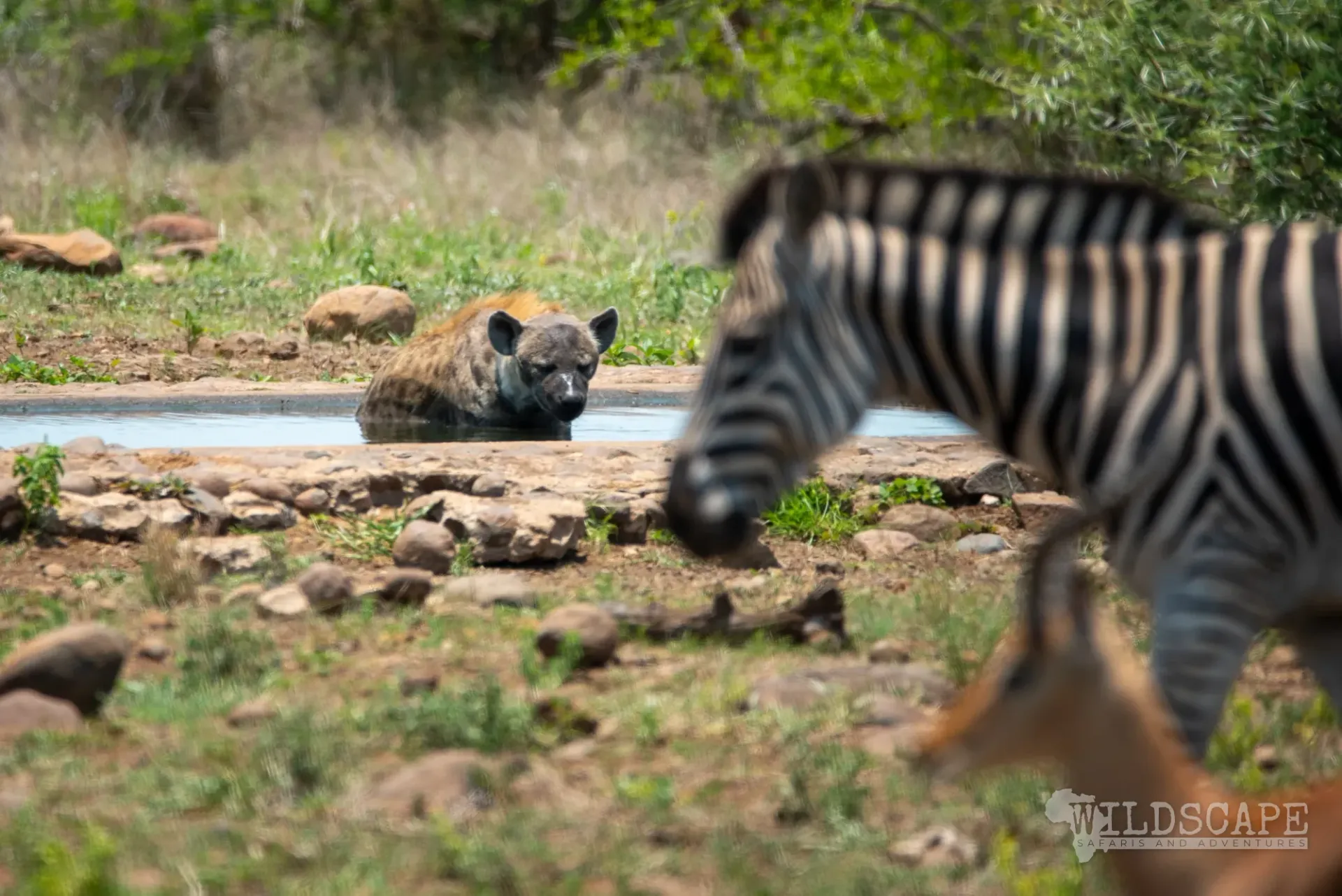
Yes. Every photograph on this site is available as a print, each with its own page, and the sizes offered always follow the shape of the original file so nothing gets cropped. The two children's books are there as well.
Do you book the trip for me?
No, and that is a deliberate line, not a gap. I plan and advise; the booking of flights, vehicle, lodges and camps you do yourself, in your own name, directly with the provider. That keeps your contract with the people who actually deliver the service, and it keeps me out of the middle of it. What you get from me is the route, the reasoning behind it and the list of what to book where. The full legal wording is on the page about my role.
What does the planning cost?
The first conversation costs nothing — by phone or video, about the trip you have in mind and whether a self-drive suits you at all. Everything beyond that is on the planning page with its price: a single 60-minute call if you only need a second opinion on your own draft, a full itinerary for a seven-day route, or the same with a day-by-day walkthrough and one round of revisions after you have slept on it. Longer trips are priced accordingly.
Which countries do you plan routes for?
South Africa, Namibia, Botswana and Zimbabwe are the four I drive myself and know from the road, and each of them has its own page here. Tanzania and Eswatini come up as well. The parks I have written up in detail are Kruger, Kgalagadi, Etosha, Chobe and Mana Pools — those pages tell you what the driving is actually like, not just what lives there.
In which language do we talk?
German or English, whichever you prefer. This whole site exists in both, and so does everything I write for you — the itinerary, the notes, the emails. Being a German speaker who has lived and guided in southern Africa is the reason people come to me in the first place: you can ask the awkward questions in your own language.
Got some more questions?
Just drop me a message and I’ll get back to you as soon as I can.